The Engineering of Elegance: A Guide to Modern Pergola Systems
In the evolving landscape of outdoor architecture, the distinction between a simple garden shelter and a sophisticated living space is often defined by the roof. Homeowners and commercial developers alike frequently find themselves asking: what is a pergola with a roof called? While the term “pergola” historically referred to an open-air framework of posts and cross-beams designed to support climbing plants, modern engineering has transformed this concept into a high-performance architectural feature.
As a leader in the outdoor industry, Greenawn has been at the forefront of this transformation for nearly three decades. By focusing on the intersection of structural integrity and aesthetic versatility, the company’s Pergola Collections provide a blueprint for what contemporary outdoor living should look like. To understand these structures, one must look past the surface and examine the engineering that makes them possible.
Defining the Pergola: An Engineering Perspective
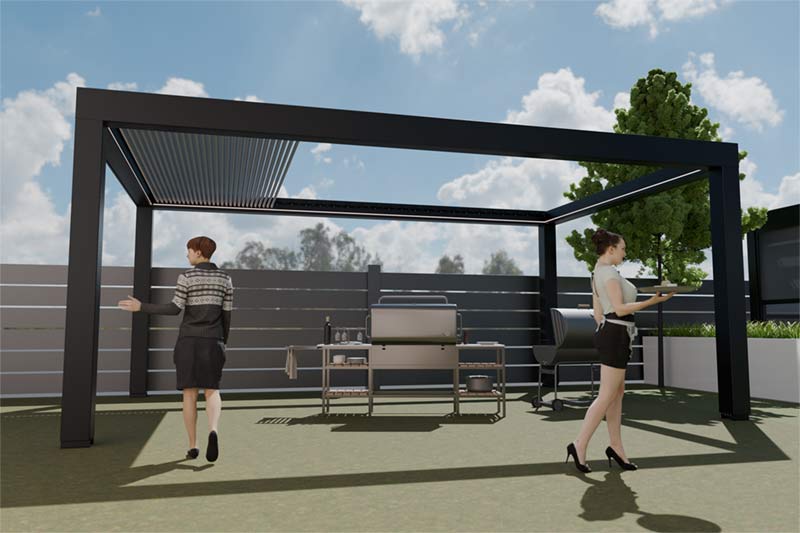
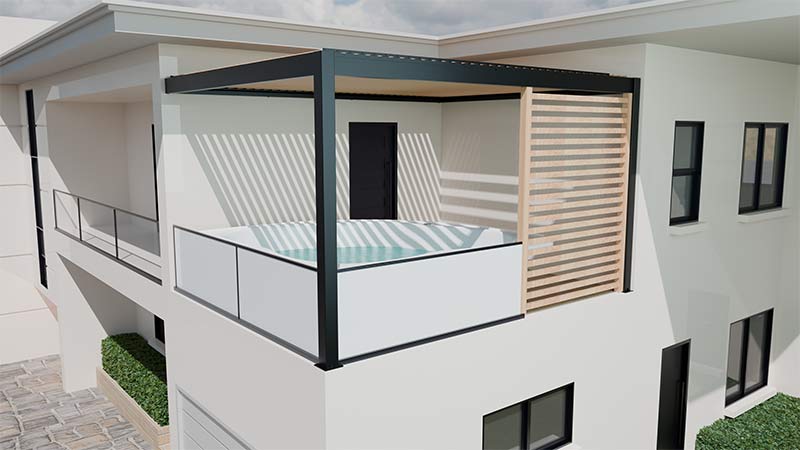
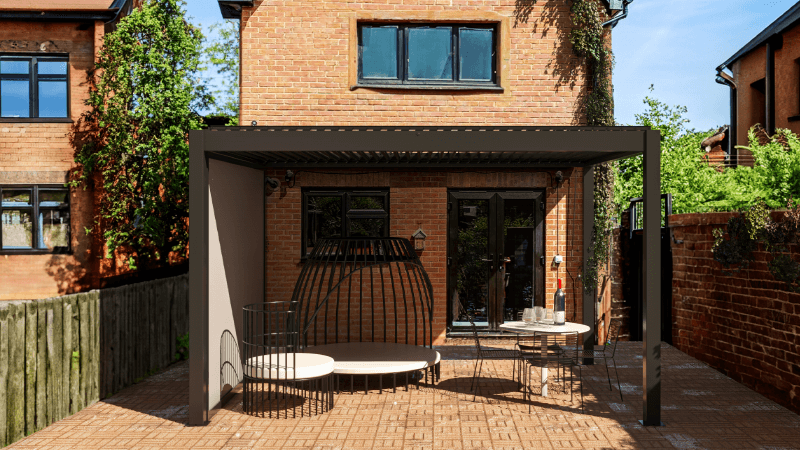
From an engineering standpoint, a pergola is a medium-to-heavy-duty outdoor structure. It is composed of three primary structural elements: vertical posts, load-bearing main beams, and a roof system—which, in modern iterations, is typically an adjustable louvered system. Unlike a gazebo, which is traditionally octagonal with a fixed, pitched roof, or a pergola, which acts as a permanent “house without walls,” a pergola is defined by its modularity and its ability to modulate the environment.
The structural foundation begins with the posts. In high-quality aluminum pergolas, these are often crafted from aluminum alloy. This material is chosen for its exceptional strength-to-weight ratio and natural resistance to the oxidation that plagues traditional steel or iron structures. These posts support the load-bearing main beams, which must be carefully designed to withstand various structural loads, including the dead weight of the roof system and live loads such as wind pressure and snow accumulation.
The roof itself is what defines the nomenclature of the structure. When people ask, “what is a pergola with a roof called?” the answer often depends on the roof’s functionality. If the roof is composed of adjustable slats that can rotate to control sunlight and airflow, it is scientifically referred to as a bioclimatic pergola. This term reflects the structure’s ability to interact with the local climate to create a comfortable microclimate for the occupants.
The Components of a High-Performance Roof System
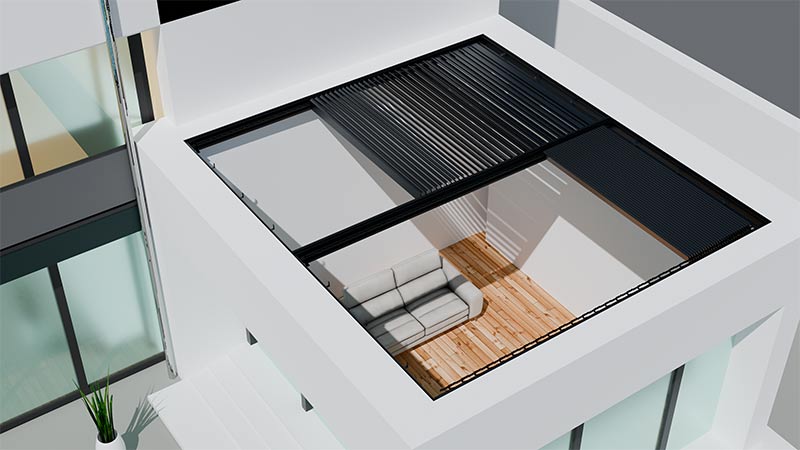
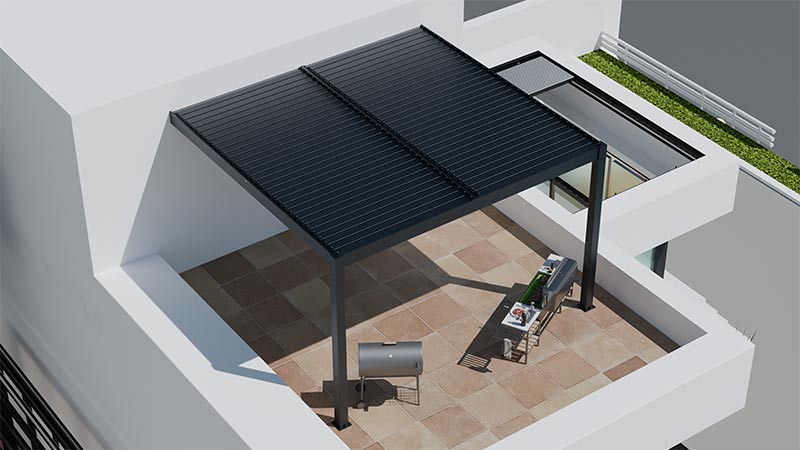
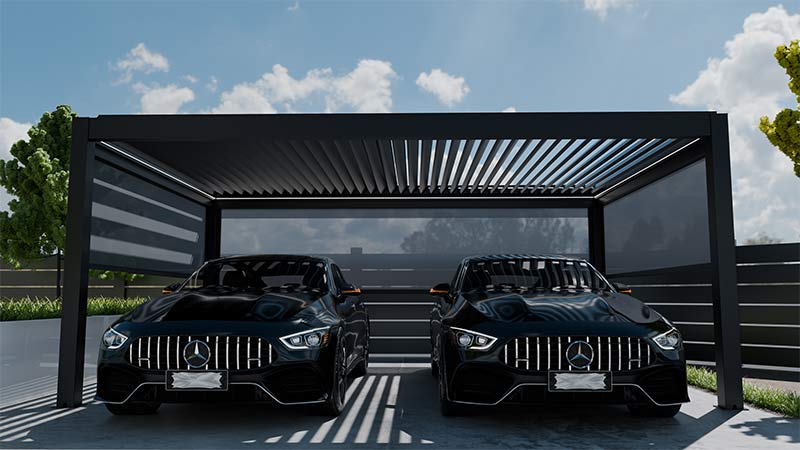
A modern Greenawn pergola is distinguished by its adjustable roof system. This is not merely a lid; it is a dynamic component of the building’s envelope. The louvers (the slats that make up the roof) are engineered to rotate from 0 °to 90 °or more.
Thermal Management: When the louvers are partially open, they allow for natural convection. Hot air rises and escapes through the roof, drawing cooler air in from the sides. This effectively lowers the temperature beneath the structure during peak summer hours.
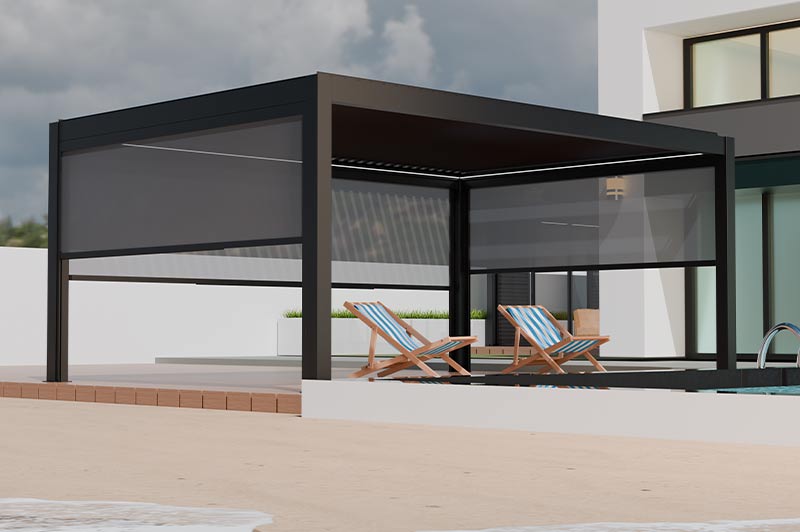
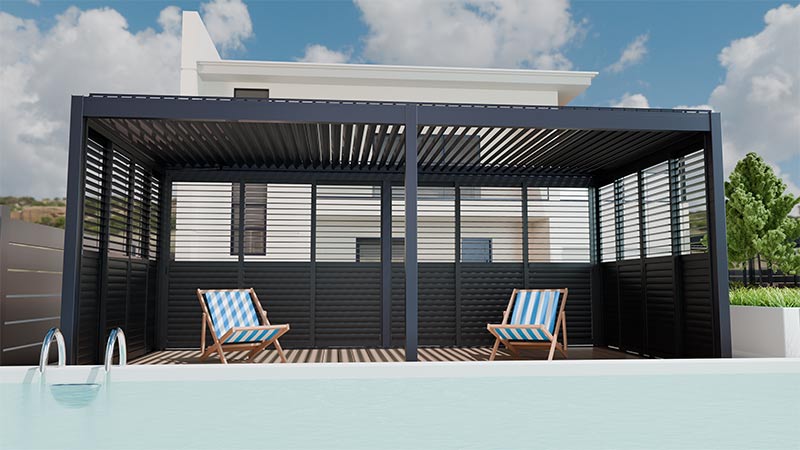
Waterproofing and Drainage: When fully closed, the louvers interlock to form a watertight seal. Precision-engineered internal gutter channels then collect the rainwater and direct it into the main beams. From there, the water is channeled down through the hollow structural posts to a ground-level exit, ensuring that the space beneath—whether it is a dining area at a villa or a lounging spot by the swimming pool—remains completely dry.
The entire structure is protected by a professional weather-resistant coating. Typically a high-grade European powder coating, this finish ensures that the aluminum remains impervious to UV radiation, salt spray (essential for coastal villas), and seasonal temperature fluctuations.
Enhancing the Outdoor Experience
To reach the level of a true “outdoor room,” a pergola must offer more than just shade. Modern subdivisions and models within the industry are increasingly integrated with smart accessories that extend the usability of the space from day to night and across all seasons.
Integrated Lighting: Many models feature 24V low-voltage LED ceiling lights embedded directly into the louver profiles or perimeter beams. This provides a safe, elegant illumination for evening social gatherings on a terrace or garden.
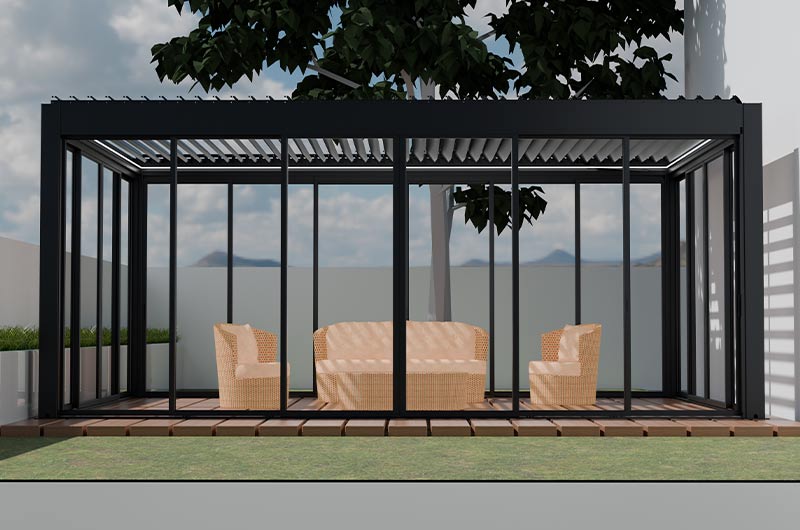
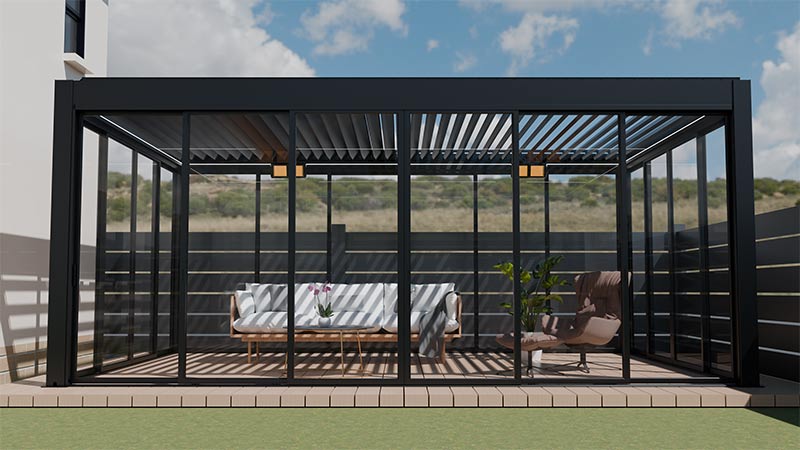
Climate Control and Privacy: Light-blocking curtains or motorized zip screens can be added to the perimeter. These high-density fabric screens provide immediate relief from the low-hanging afternoon sun and serve as a windbreak, further enhancing the “bioclimatic” nature of the structure.
Because these structures are designed with a sturdy frame and modular components, they support DIY assembly. This is a significant advantage for global distributors and dealers, as it simplifies the logistics of wholesale trade and allows end-users to participate in the construction of their own outdoor sanctuary.
Applications and Strategic Value
Whether installed in a sprawling garden, a private terrace, or a commercial poolside area, the pergola serves as a multi-functional hub. For B2B partners, the strategic value lies in the versatility of the Pergola Collections. By offering a variety of sizes suitable for different outdoor spaces, manufacturers like Greenawn enable dealers to provide tailored solutions for diverse architectural styles—from ultra-modern minimalist villas to traditional Mediterranean estates.
In conclusion, when prospective buyers ask what is a pergola with a roof called, they are often looking for an investment in immovable property that enhances lifestyle and property value. It is a structure that bridges the gap between the indoors and the outdoors, providing the protection of a permanent building with the airy freedom of a garden. By understanding the engineering and terminology behind these structures, professionals and homeowners can make informed decisions that result in a durable and stylish outdoor experience.