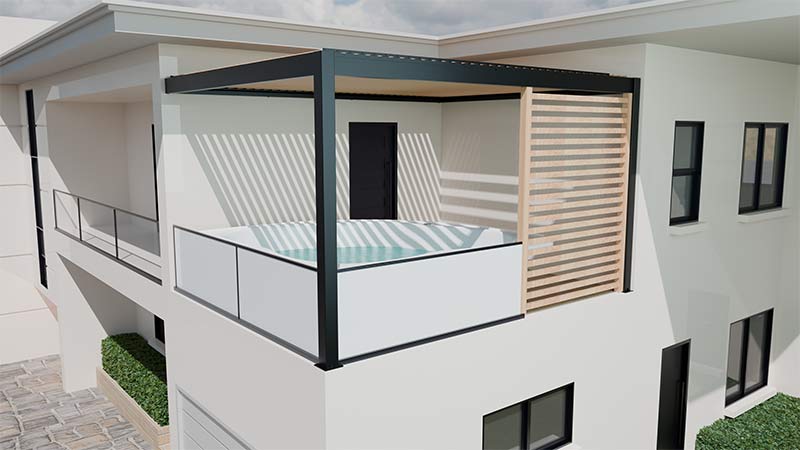
Maximizing Skybound Spaces: A Comprehensive Guide to the Modern Roof Pergola
As urban landscapes become increasingly dense, the value of rooftop real estate has skyrocketed. For property developers, boutique hotel owners, and luxury homeowners, the transformation of a flat roof into a functional “sky lounge” is no longer a luxury—it is a strategic necessity. However, moving from a simple open deck to a year-round outdoor room requires a specialized roof pergola solution that addresses the unique challenges of high-altitude environments, with the most critical being structural waterproofing and wind resistance.
Greenawn, a premier manufacturer with nearly three decades of expertise in all-aluminum outdoor pergolas, has developed a suite of solutions designed to thrive in these demanding conditions. By integrating a sturdy frame with advanced weather resistant coating technology, the brand offers a variety of sizes suitable for different outdoor spaces, ensuring that every rooftop—from a compact urban balcony to a sprawling commercial terrace—can be utilized to its maximum potential.
The Critical Importance of Rooftop Waterproofing
Unlike ground-level installations, a roof pergola sits directly above the building’s structural envelope. This means that any failure in water management can lead to catastrophic damage to the interior of the building. Traditional pergolas often function merely as shade structures, but for a rooftop application, the system must act as a secondary roof.
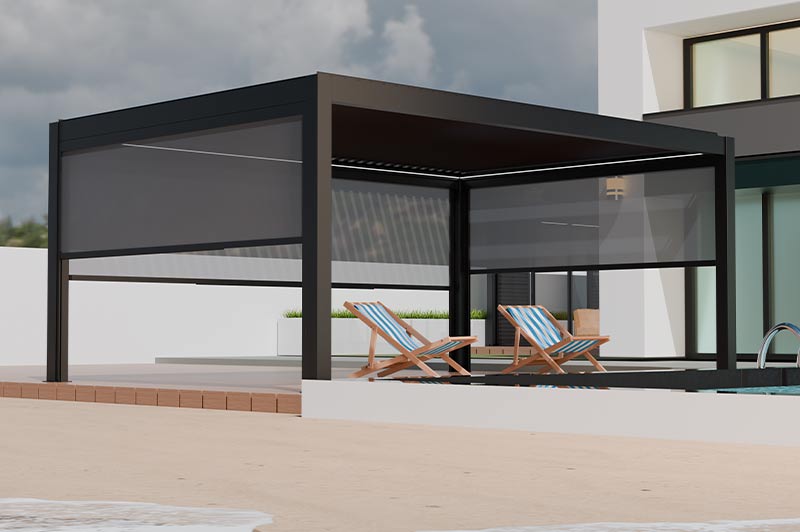
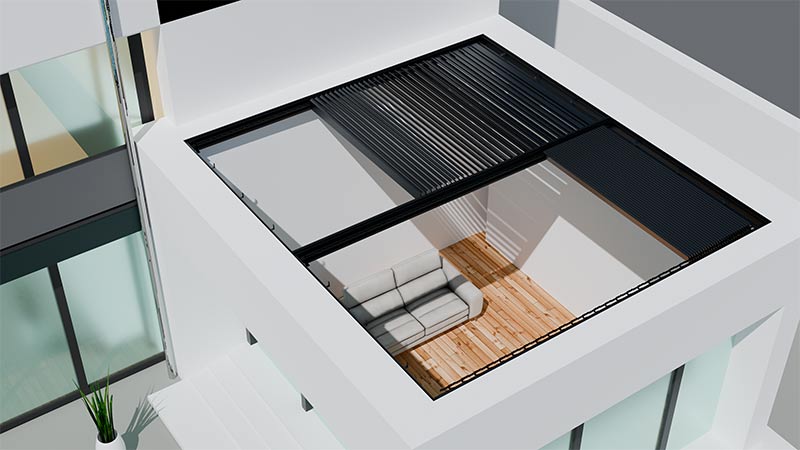
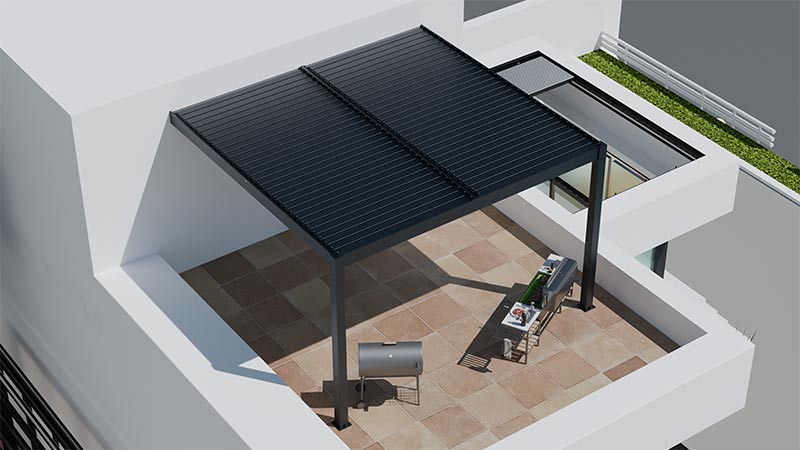
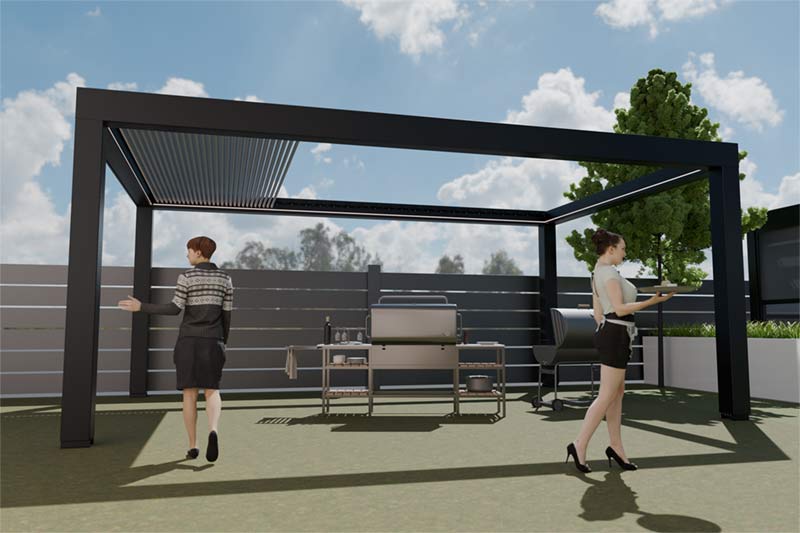
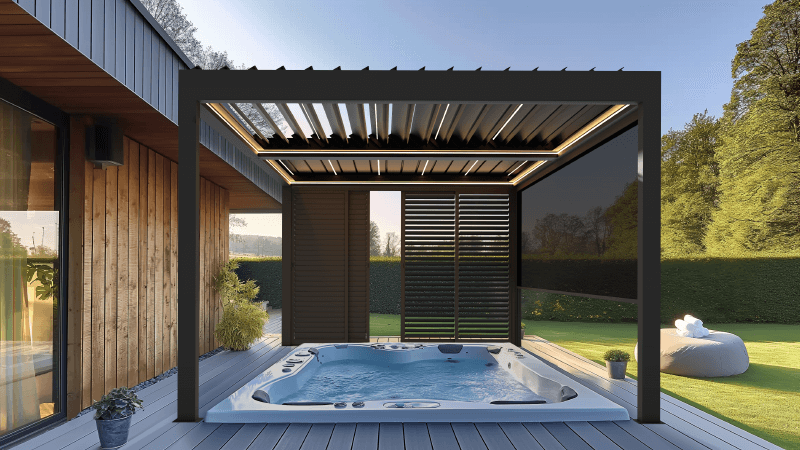
Greenawn addresses this through an engineered adjustable roof system. When the louvers are closed, they form a tight waterproof seal. Rainwater is managed via an internal gutter system integrated into the beams and posts, ensuring that water is channeled safely away without pooling or seeping into the building’s surface. This focus on “Brand Solutions” ensures that B2B partners can market these structures as semi-permanent outdoor rooms rather than temporary shade fixtures.
Popular Waterproof Pergola Roof Options: A Comparative Analysis
When selecting the right roof pergola, the choice of roofing material dictates the longevity, maintenance, and overall comfort of the space. Below are the most prevalent options currently dominating the global market.
- Adjustable Louvered Roofs (The Bioclimatic Standard)
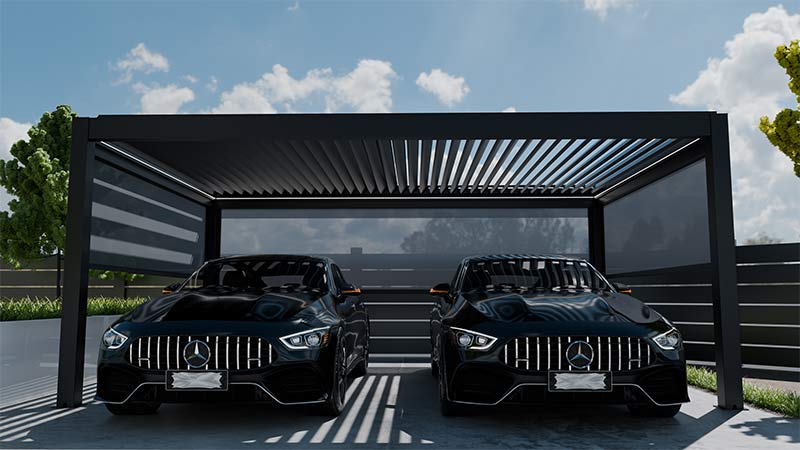
This is the flagship offering of the Greenawn collection. These systems feature innovative aluminum louvers.
Pros: Offers total control over light, ventilation, and waterproofing. In the closed position, it provides a solid, heavy-duty roof.
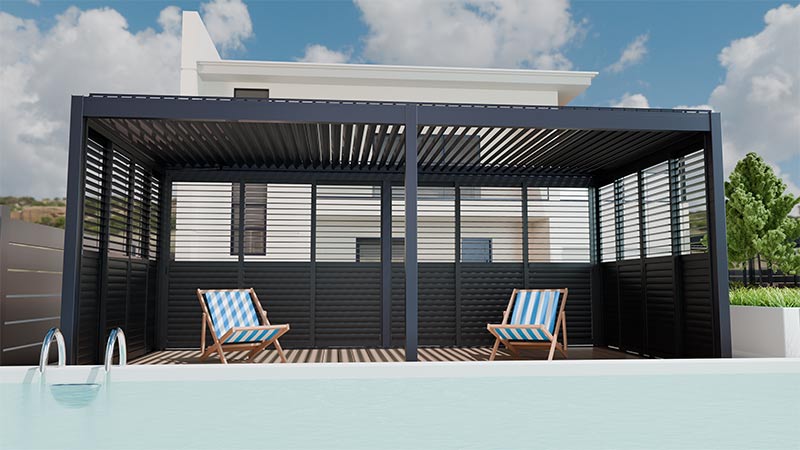
Best For: High-end villas, swimming pools, and commercial rooftop bars where flexibility is key.
- Polycarbonate (PC) Panels
Polycarbonate is a high-impact, lightweight plastic that allows for light transmission while blocking UV rays.
Pros: Highly durable, nearly unbreakable, and much lighter than glass, making it ideal for rooftops where weight load is a concern.
Cons: Can create a “greenhouse effect” if not properly ventilated and may produce noise during heavy rain.
- Glass Pergola Roofs
For a high-end, contemporary aesthetic, glass is often the preferred choice for a roof pergola.
Pros: Offers an unobstructed view of the sky and maximum natural light.
Cons: Requires significant structural reinforcement due to weight. It also requires frequent cleaning to maintain transparency and offers no shade unless combined with internal awnings.
- Retractable Fabric Roofs and Awnings
These systems utilize high-tenacity, waterproof architectural fabrics that can be retracted at the push of a button.
Pros: Offers the most “open” feel when retracted. Modern PVC-coated fabrics are exceptionally waterproof and fire-retardant.
Best For: Restaurants that want to offer an “al fresco” experience during clear weather but need immediate protection during rain.
- Plastic and Corrugated PVC Panels
A more budget-friendly option, these panels are often used in DIY applications.
Pros: Lightweight and easy to install.
Cons: They often lack the “sturdy frame” feel and are prone to becoming brittle over time due to high UV exposure on rooftops.
- Sunshade Sails and Fabric Canopies
While highly aesthetic and “breezy,” these are generally the least waterproof option.
Pros: Cost-effective and provides a soft, organic look.
Cons: Not suitable for heavy rain or snow loads; water can pool in the center of the sail if not tensioned perfectly.
- Sealed Composite Materials or Wood
For a traditional look, some choose composite slats or sealed wood.
Pros: Warm, organic aesthetic.
Cons: High maintenance. Even with a weather resistant coating, wood is prone to warping and rot when exposed to the extreme cycles of heat and moisture found on rooftops.
Engineering for High-Altitude Performance
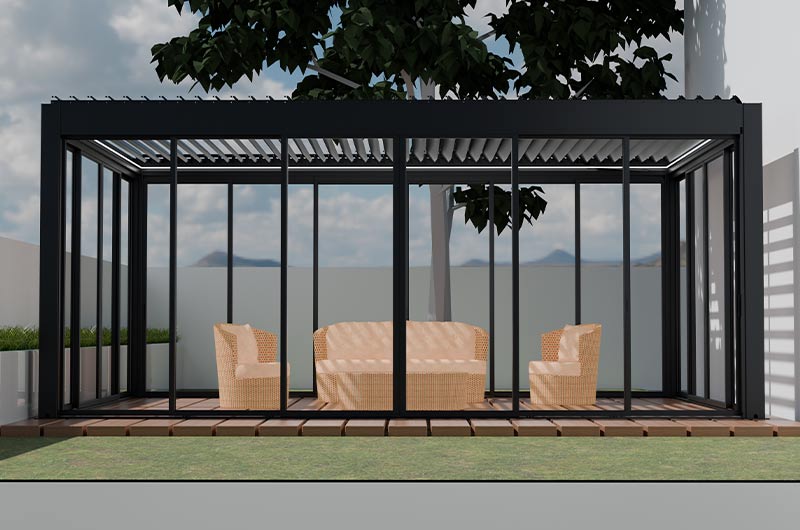
Beyond the roof material, a roof pergola must be engineered to withstand the unique physics of rooftops, specifically “wind uplift.” Greenawn utilizes a high-strength aluminum alloy to ensure the structure remains rigid. Each subdivision and model is designed with hidden connection points that enhance the structural integrity without compromising the sleek, modern design.
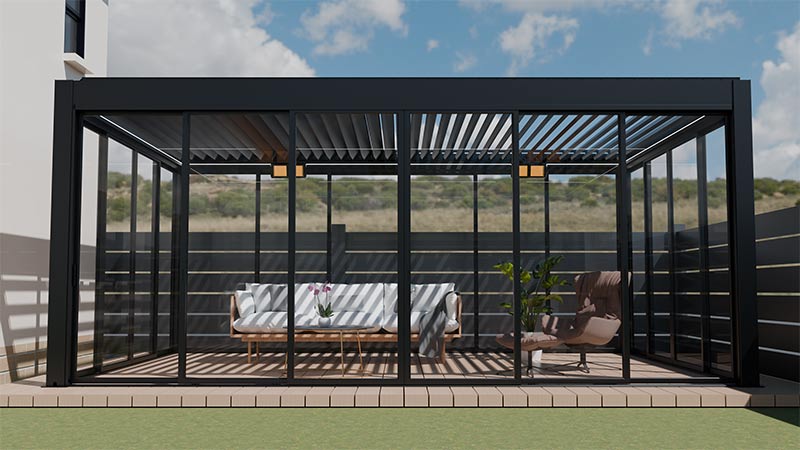
Furthermore, the convenience is perfected through intelligent accessories. Some models come with ceiling lights (24V low-voltage LED strips) and light blocking curtains. These curtains are essential for rooftops, where the low-hanging afternoon sun can be particularly intense and where privacy from neighboring tall buildings is a priority. These features should be explained in detail on each product page to ensure that the end-user understands the total value of the investment.
B2B Strategic Advantage: Modular DIY Support
As an OEM/ODM enterprise that integrates industry and trade, Greenawn mainly seeks distributors and dealers who prioritize quality and ease of implementation. Recognizing that labor costs are a significant barrier in the West, the all-aluminum outdoor pergolas are designed to be modular.
This supports DIY assembly, allowing buyers to assemble and build their own haven with precision-engineered parts. No specialized welding is required; the parts are designed to bolt together intuitively. This modularity allows wholesale partners to stock standard sizes and fulfill orders quickly, reducing the lead time for local projects.
Conclusion: Redefining the Urban Horizon
A roof pergola is more than just a renovation; it is an investment in a comfortable outdoor experience throughout the year. By selecting a manufacturer that understands the nuances of bioclimatic design and structural waterproofing, B2B partners can provide their clients with a world-class outdoor living room that stands the test of time.
Whether it is a private villa rooftop or a commercial hotel terrace, the combination of a sturdy frame, an adjustable roof system, and integrated accessories like LED lighting and curtains creates a versatile sanctuary that balances the rhythms of nature with the comforts of modern engineering.