
How Do You Waterproof a Pergola? 8 Roof Ideas to Try
September 18, 2025
Want to enjoy your pergola all year round? Looking for an outdoor space that keeps you comfortable, rain or shine? In this guide, we’ve rounded up 8 practical waterproof pergola roof solutions. Whether you’re looking for a budget-friendly option or aiming for a premium upgrade, there’s always a choice that fits your needs. Let’s explore how the right waterproof pergola ideas can transform your outdoor living!
Further reading: “Discover the best pergola roof cover ideas for your outdoor space!”
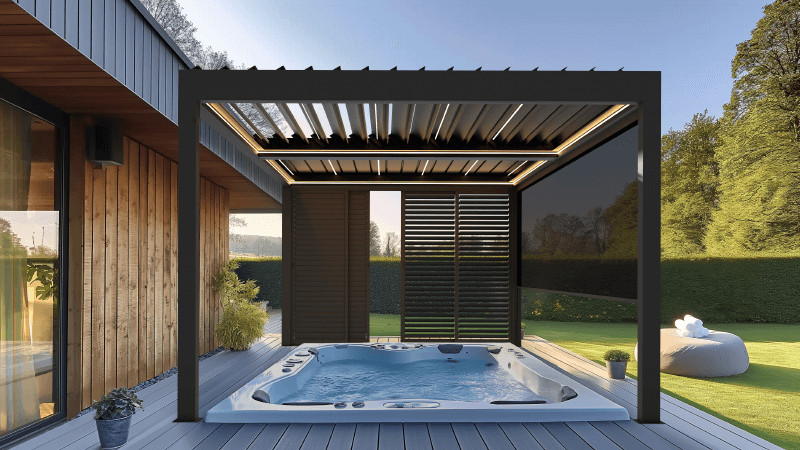
1.Popular Waterproof Pergola Covers Options
Here are some common options for waterproof pergola covers:
Polycarbonate Panels (PC)
Polycarbonate panels are lightweight, impact-resistant, and naturally water-repellent, making them an ideal pergola roofing choice. Rainwater quickly slides off the dense surface, while UV or anti-fog coatings improve light transmission and durability. The only downside is their lower surface hardness—clean them with a soft cloth to avoid scratches.
Metal Pergola Roofs
Metal roofs usually come in aluminum and steel options. Aluminum pergola roof is lightweight and corrosion-resistant, while steel is thicker, stronger, and more heavy-duty. Waterproofing is achieved through interlocking seams and sealing strips, with drainage systems often concealed within the structure for a sleek look. Powder coating or PVDF finishes further enhance longevity. Choose aluminum for low-maintenance use, or steel if you need maximum durability.
Glass Pergola Roofs
Glass roofs stand out for their modern look and superior natural lighting. While glass itself is waterproof, sealing is critical. EPDM gaskets and silicone sealants are standard, while premium systems often use double-sealing or self-cleaning coatings. Glass offers unmatched transparency and elegance, but it’s heavy and requires a strong frame and professional installation.
Adjustable Louver Roofs
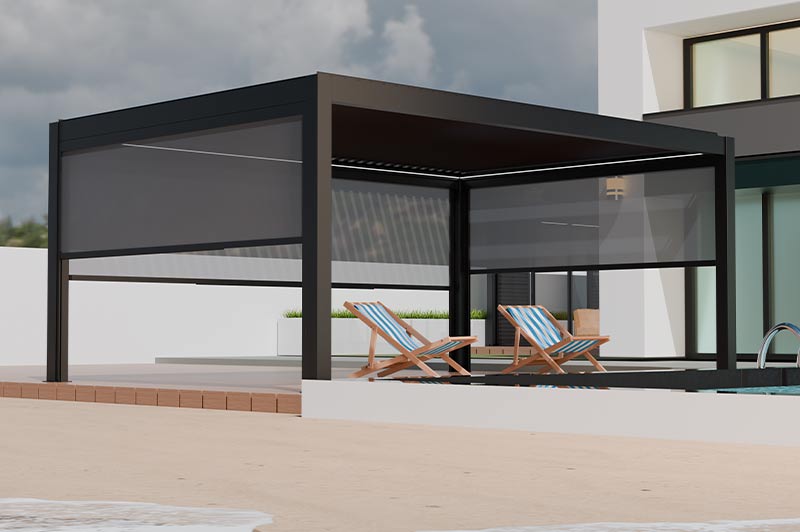
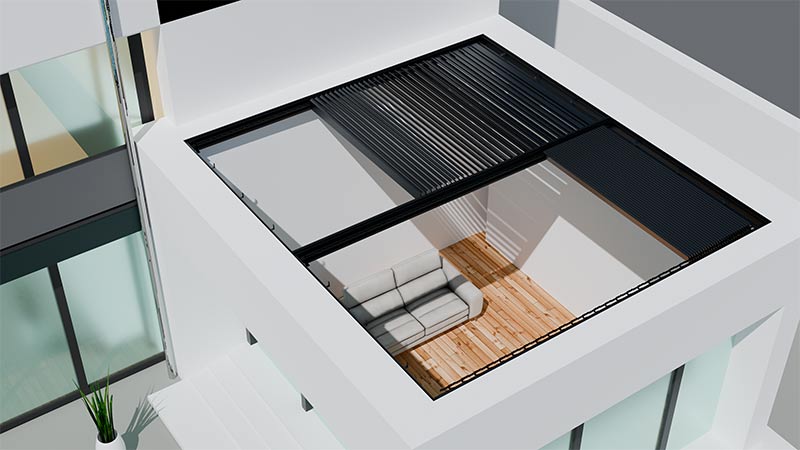
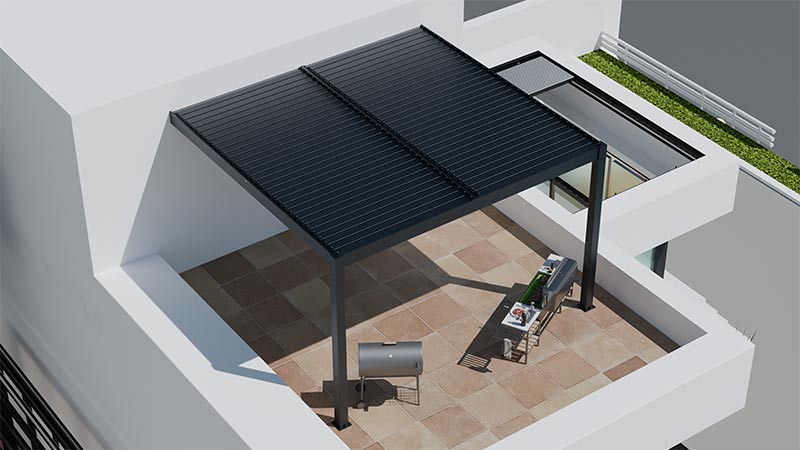
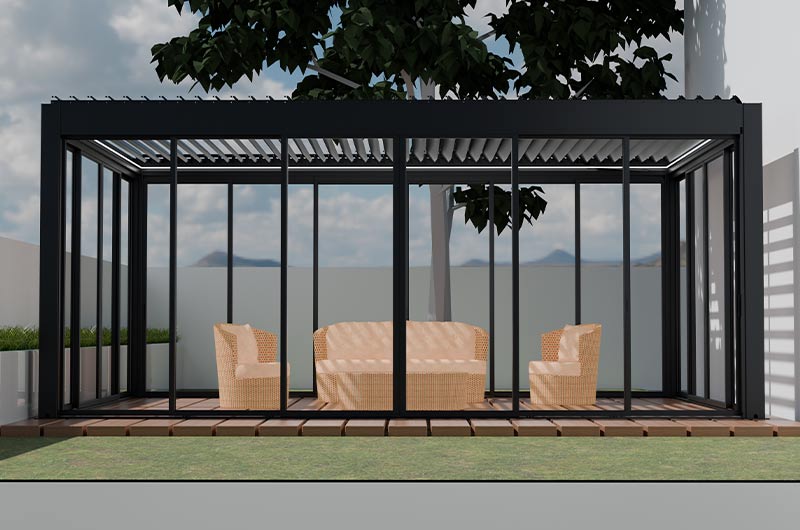
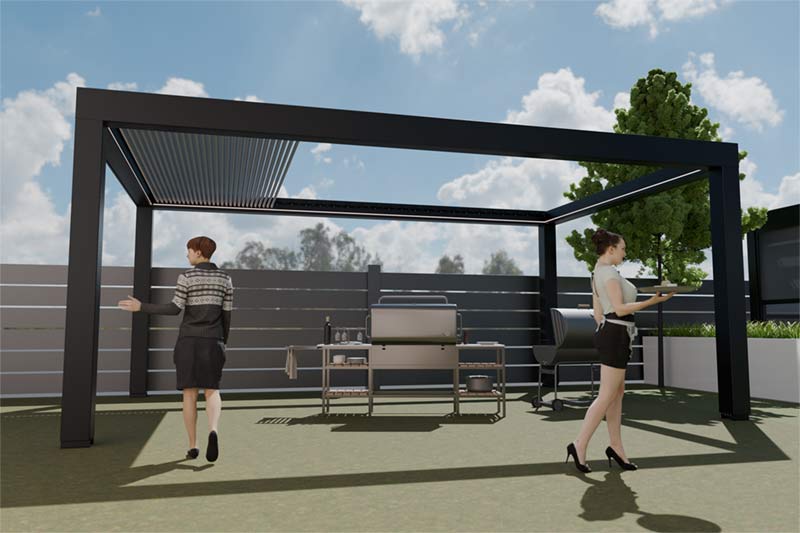
Adjustable Louver Roofs pergola, usually made from extruded aluminum, provides the most versatile solution. It is particularly suitable for outdoor spaces such as swimming pools, patios, and gardens.. When closed, the louvers create a fully waterproof surface. High-end systems come with rain sensors that close automatically. Integrated drainage channels are key to their waterproofing. They combine shading, ventilation, and weather protection, making them the most comprehensive—and premium option.
Retractable Fabric Roofs & Awnings
These systems often use polyester or acrylic fabrics with PU, PVC, or Teflon coatings. Waterproofing relies on three factors: proper tension, fabric coating, and sufficient slope (usually over 10°). Premium models may include hidden gutters or zipper tracks for better sealing. They’re flexible and stylish but less durable than hard roofs.
Plastic / Corrugated PVC Sheets
PVC or fiberglass-reinforced sheets are lightweight, affordable, and semi-transparent. The corrugated design naturally channels rainwater away. To prevent leaks, panels should overlap sufficiently (at least 200mm), and screw holes must be sealed with washers or waterproof caps. A great budget alternative to glass, though less durable over time.
Shade Sails & Fabric Canopies
Fabric canopies are budget-friendly, decorative, and easy to install—perfect for small yards or temporary setups. Made from polyester or acrylic fabrics with water-repellent coatings, they work best when pulled tight with at least a 20° slope. Seams should be heat-sealed or taped for better performance. While they handle light rain, they’re less resistant to strong winds or heavy downpours.
Composite or Wood with Sealing Treatment
For a natural look, wood or composite materials are a popular choice. Wood requires waterproof paints or oil-based sealants to prevent cracking, while composites are resin-infused or multi-layer pressed for better durability and lower maintenance. Both should be installed with slope and sealed joints for smooth drainage.
Extra Tips to Improve Waterproofing
-
Add slope to prevent water pooling
-
Seal edges, screw holes, and joints properly
-
Integrate gutters and downpipes
-
Perform regular inspections and maintenance
Which Waterproof Pergola Roof Should You Choose?
We’ve introduced 8 waterproof roofing options, but the best choice depends on your preferences and project needs:
-
Balconies/Backyards: Polycarbonate panels or budget-friendly PVC sheets with waterproof curtains.
-
High-end Residential & Public Spaces: Motorized louver roofs for a premium, versatile solution.
-
Eco-friendly Projects: Composite wood or sustainable aluminum for durability and sustainability.
The GR-9700A Pergola System: Premium Waterproof Solution
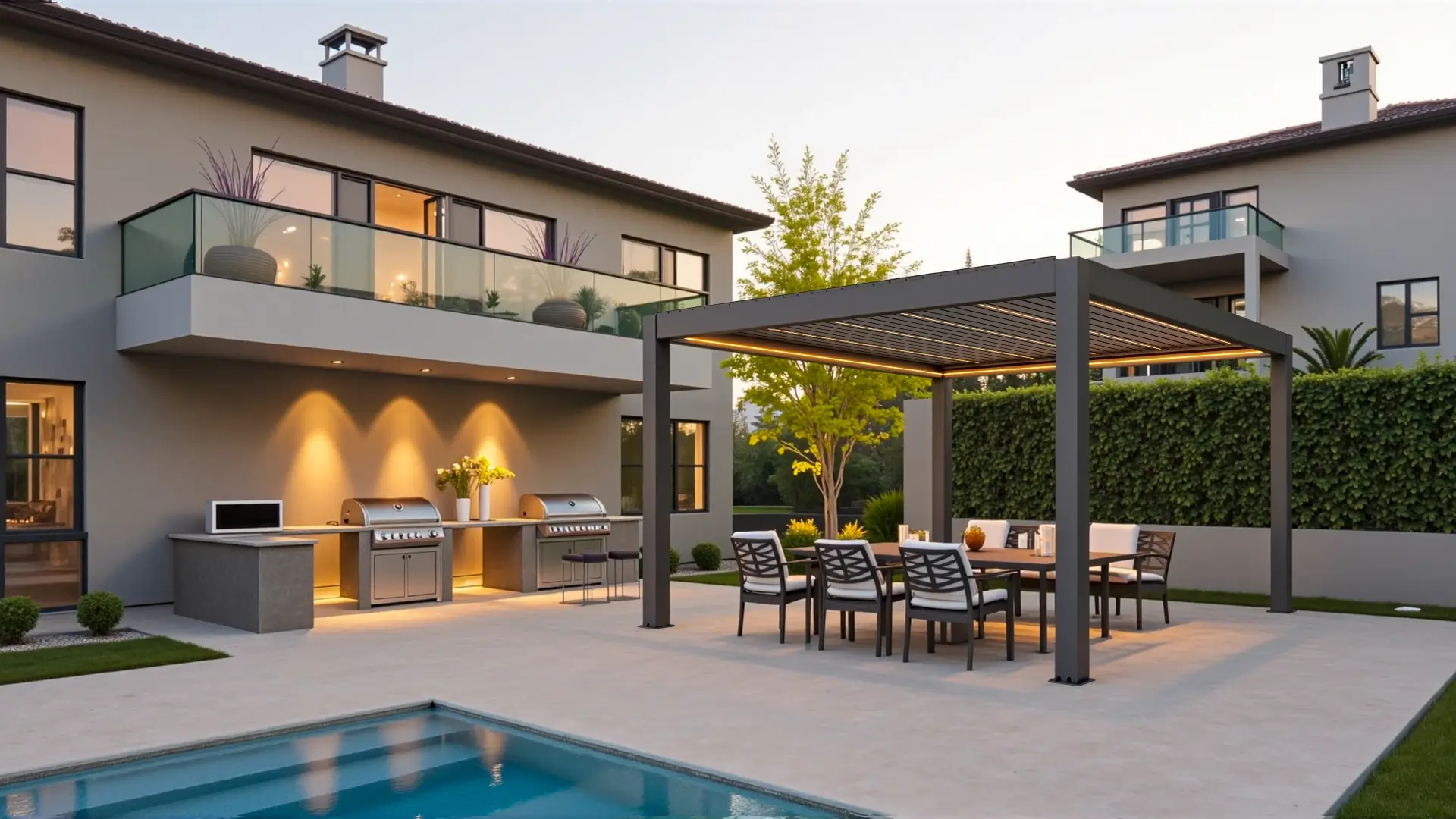
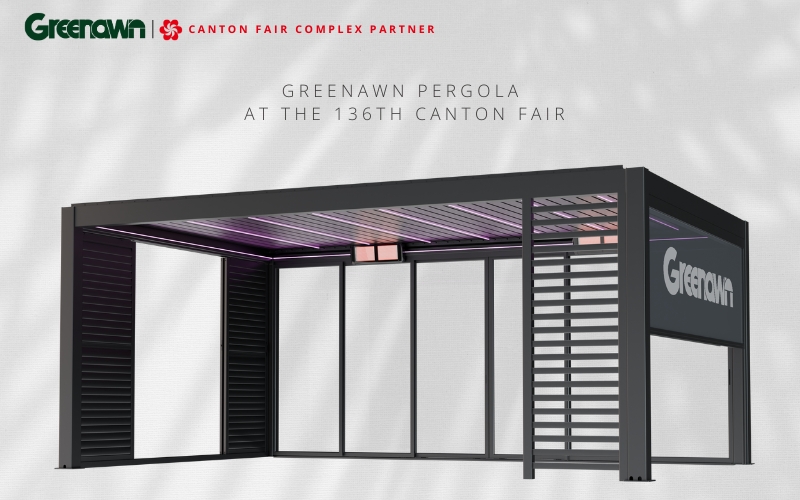
If you’re looking for a high-end, durable, and fully waterproof pergola, the GR-9700A system is your ideal choice. Built with high-quality aluminum and advanced louver technology, it offers:
-
100% Waterproofing: Integrated drainage system and double-sealed louvers keep your space dry even during heavy rain.
-
Smart Control: One-touch operation lets you adjust shade, ventilation, and rain protection while keeping a clean, modern look.
-
Modern Design: Minimalist lines and premium aluminum enhance both aesthetics and property value.
-
Durability & Low Maintenance: Powder-coated aluminum resists harsh weather, requiring minimal upkeep while ensuring long service life.
Why Work With Us?
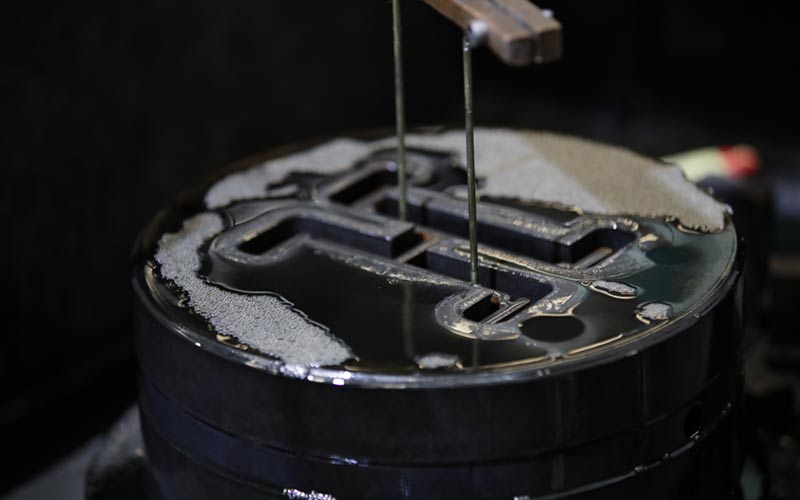
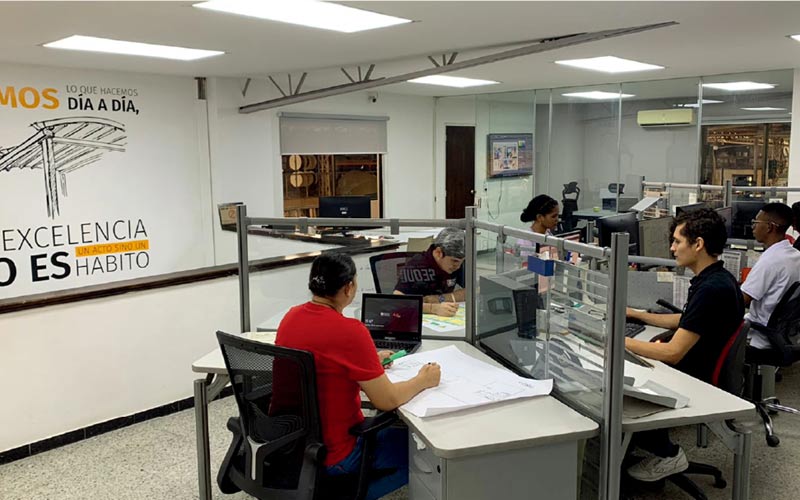
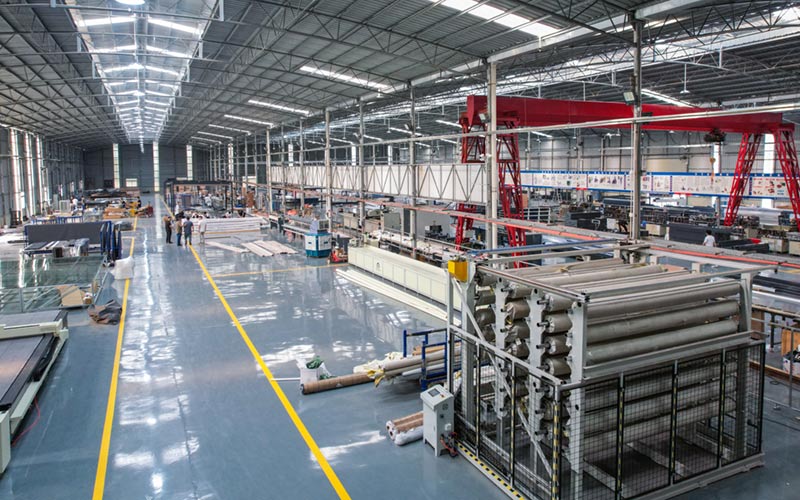
With 28 years of manufacturing experience, we are a trusted pergola supplier offering both standard products and OEM/ODM customization. From size, color, and functionality to branding requirements, we deliver tailored solutions to strengthen your competitive edge. Backed by advanced production lines, strict quality control, and international export expertise, we provide reliable, high-quality pergola systems for global partners.
If you’re seeking a long-term partner who can deliver one-stop OEM/ODM services, Greenawn is your ideal choice! Contact Greenawn directly.



How Much Does a Louvered Pergola Cost?
blogAluminum vs. Wood Pergolas: Which is better?
blogPergola Renovation Cost Guide For dealers: Repair, Upgrade, or Replace?
blog