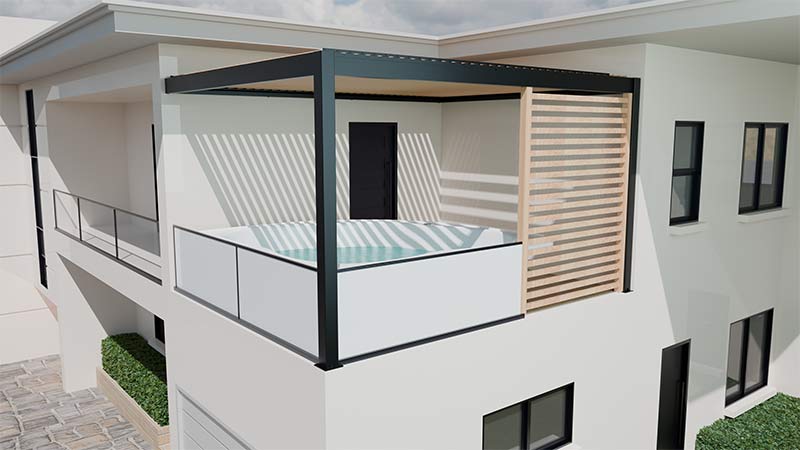
Mastering Spatial Design: A Strategic Guide to Pergola Furniture Layout
The architectural addition of an all-aluminum pergola marks the transition of a backyard from a simple outdoor area to a high-functioning extension of the home. However, the true success of this transformation lies in the internal organization of the space. A well-conceived pergola furniture layout does more than just fill an area; it dictates the rhythm of movement, the comfort of the inhabitants, and the overall versatility of the environment. As a premier B2B enterprise integrating industry and trade, Greenawn provides the structural foundation for these spaces, but it is the strategic arrangement of furniture that breathes life into the design.
Optimizing Space for Comfort and Movement
The primary objective of any residential or commercial outdoor project is to balance high-capacity seating with effortless mobility. In the context of a pergola furniture layout, the concept of “traffic flow” is paramount. A space that feels cramped or forces guests to navigate a labyrinth of chair legs will ultimately go unused.
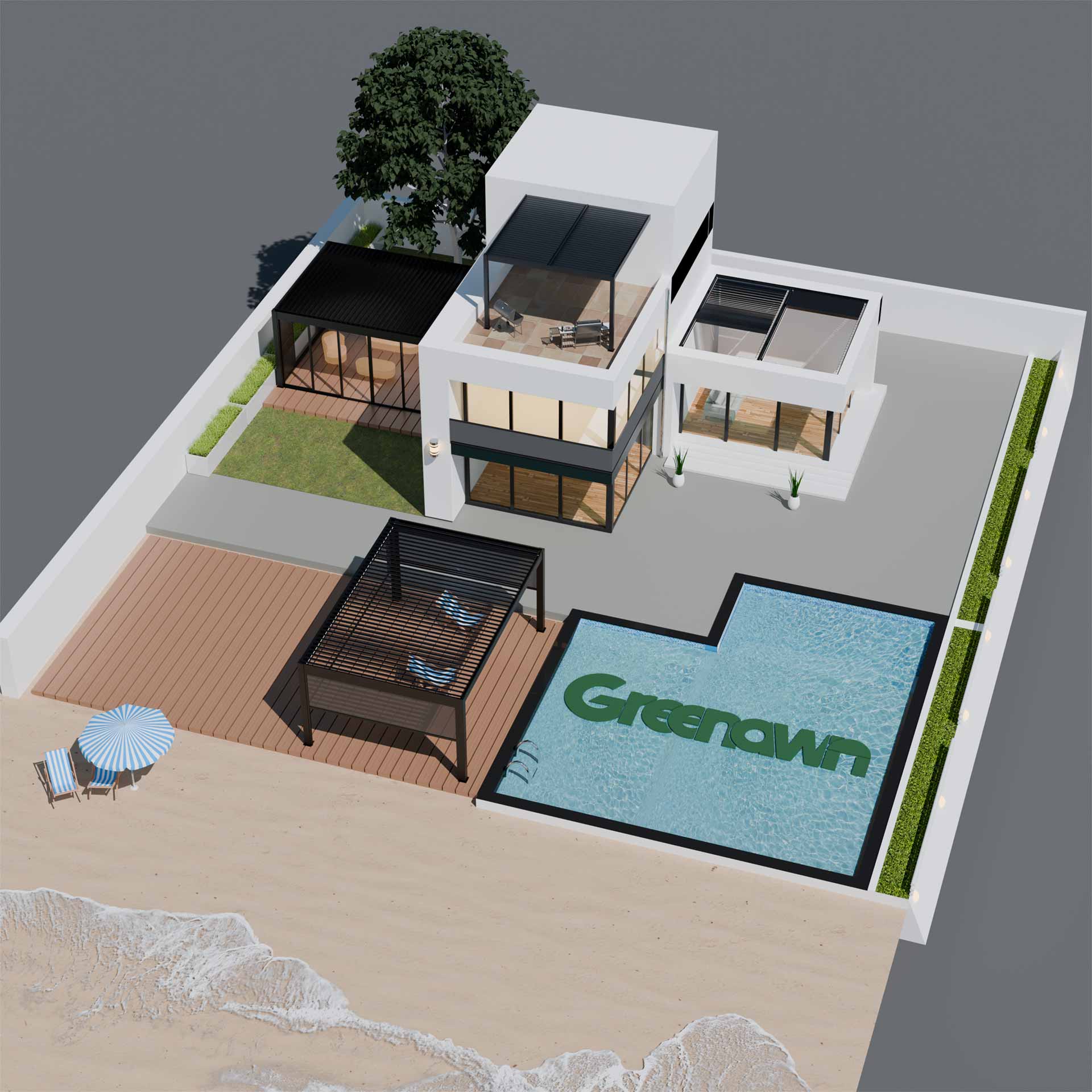
To ensure ease of movement, designers should prioritize a “pathway-first” approach. This involves leaving an appropriate distance for primary walkways and between coffee tables and seating. For a Greenawn pergola, which often serves as a focal point in a garden or by a swimming pool, the layout should lead the eye—and the feet—toward the most scenic views. By keeping the center of the space relatively open or using low-profile furniture, the area maintains an airy, expansive feel that encourages relaxation. Comfort is not just about the softest cushions; it is about the psychological comfort of having enough personal space to breathe and move freely.
Zoning Different Activities
Modern outdoor living requires multi-functional environments that can shift from a quiet morning retreat to a high-energy social hub. Achieving this versatility requires clear “zoning.” Even within a single structural footprint, a pergola furniture layout can be divided into distinct functional areas:
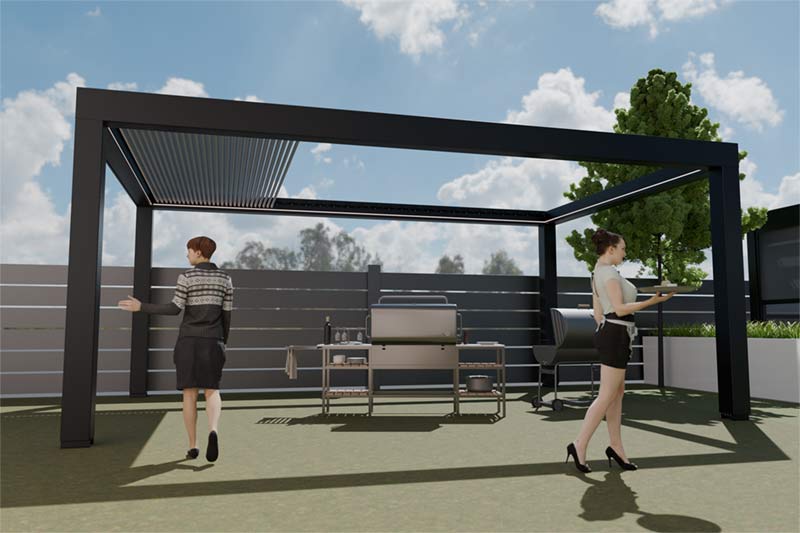
The Dining Zone: Usually anchored by a sturdy table, this area should be positioned for easy access to the house or outdoor kitchen.
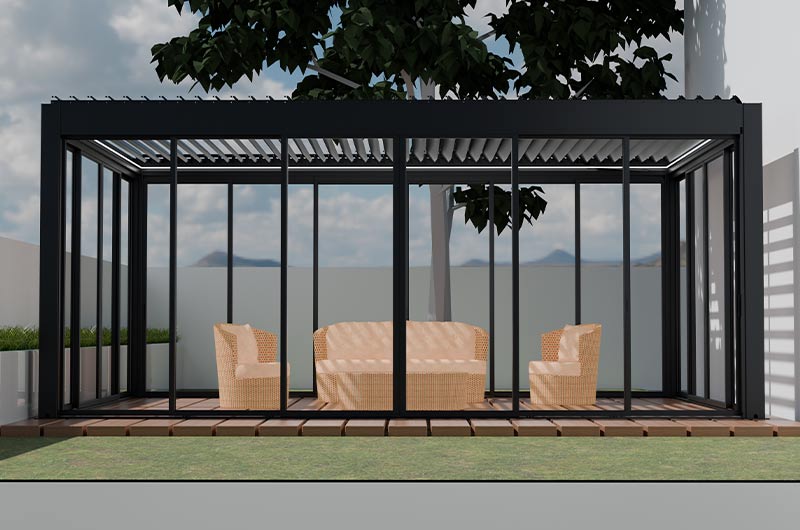
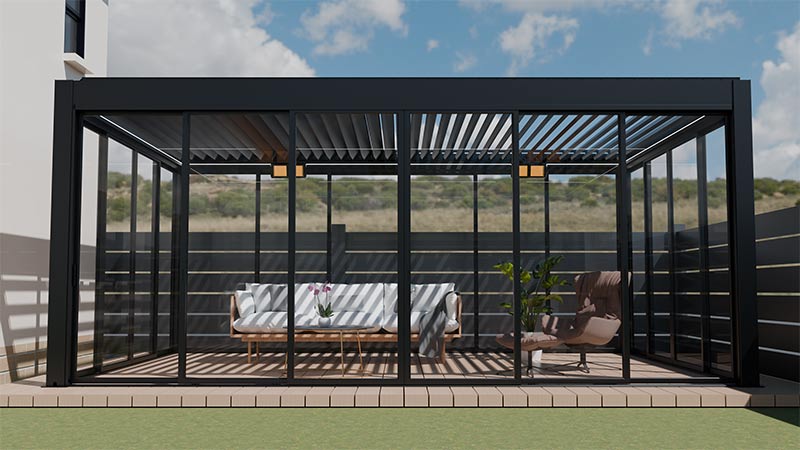
The Lounge Zone: Utilizing modular sofas or deep-seating armchairs, this zone should be the “soft” heart of the pergola, designed for long-term comfort.
The Quiet Nook: In larger models, a single hanging chair or a recliner placed in a corner can create a dedicated reading or meditation sanctuary.
By physically separating these activities—perhaps using an outdoor rug to define the lounge or a row of planters to edge the dining area—the pergola becomes a high-functioning “outdoor suite” that caters to every member of the family or every guest at a resort.
Balancing Visual Weight and Symmetry
Aesthetic harmony in a pergola furniture layout is achieved through the careful management of visual weight. Symmetry provides a sense of formality and calm, making it ideal for high-end villa terraces. For instance, placing two identical sofas opposite each other across a central fire pit or coffee table creates an instant sense of order and luxury.
However, for more natural or organic garden settings, asymmetrical balance can be equally effective. This might involve placing a large sectional on one side and balancing it with two smaller armchairs and a floor lamp on the other. The key is to avoid “clumping” all heavy furniture in one corner, which can make the entire structure feel off-balance. By considering the proportion of the furniture relative to the sturdy frame of the pergola, you ensure that neither the architecture nor the furnishings overwhelm the scene.
Integrating Pergola Features into the Layout
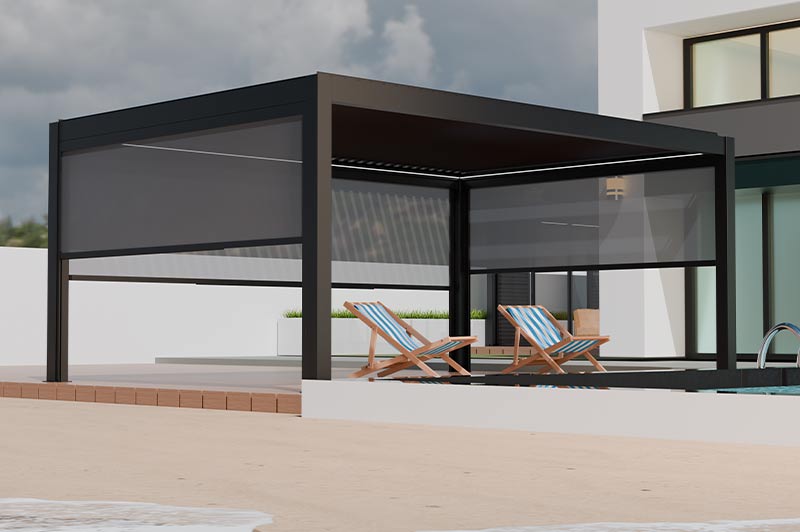
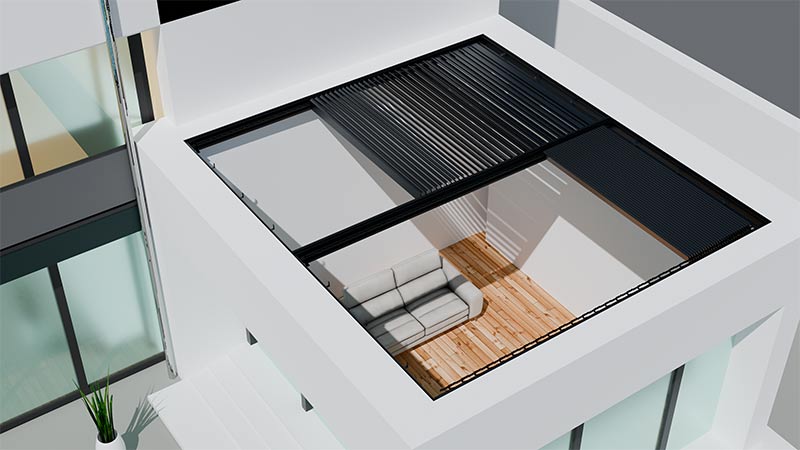
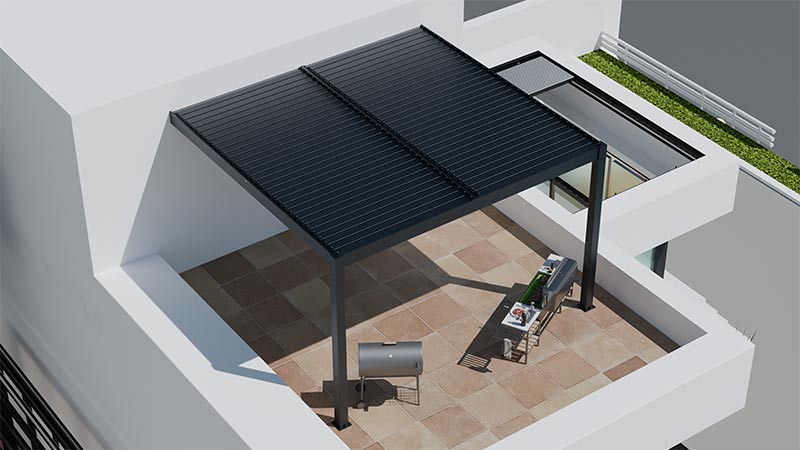
The unique mechanical features of a Greenawn pergola should directly influence how furniture is positioned. Unlike static structures, these pergolas feature an adjustable roof system that allows for total sovereignty over the micro-climate.
For example, a dining set is best placed directly under the central louvered section to maximize the cooling “chimney effect” when the slats are angled open. Conversely, lounge seating might be positioned to take advantage of the shade cast by the frame during peak afternoon hours. If the model includes integrated light-blocking curtains or motorized zip screens, the furniture should be arranged to ensure these features can be deployed without obstruction, creating a secluded sanctuary that is protected from lateral winds and low-hanging sun.
Adapting Layout for Seasonal and Event Needs
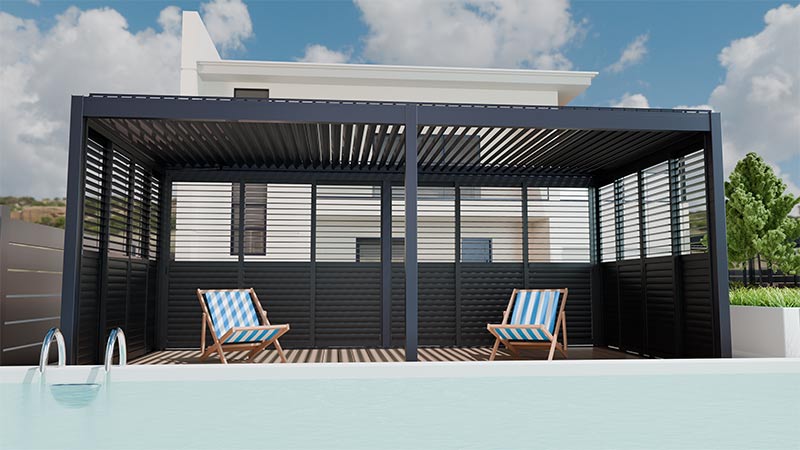
A professional-grade pergola furniture layout must be adaptable. During the summer, the focus may be on an open, breezy configuration that emphasizes the swimming pool view. In the autumn, furniture may be clustered closer together to retain heat and create a cozy atmosphere around integrated heating elements.
For social gatherings, the layout should favor “conversation circles.” This might mean moving peripheral chairs into the center or utilizing multifunctional ottomans that serve as both seating and side tables. Because the frames produced by Greenawn are built to provide a comfortable outdoor experience throughout the year, the furniture should follow suit—remaining flexible enough to accommodate a quiet family dinner one night and a large-scale cocktail party the next. By leveraging Greenawn’s robust OEM/ODM capabilities, distributors can provide high-end, professionally integrated solutions that redefine luxury outdoor living for diverse global markets.